

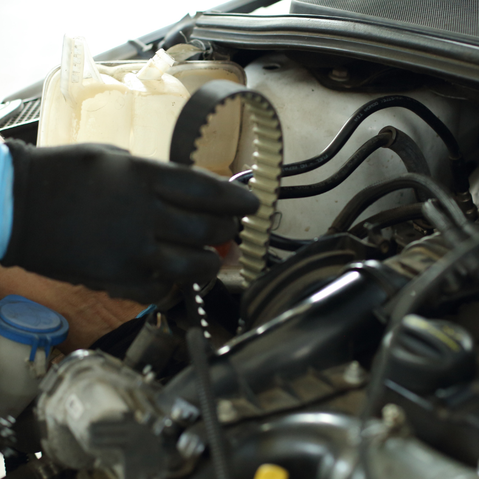
Wet Timing Belts Explained: What They Are and Why They Fail
Here at Thame Cars, we’re seeing more and more of our Oxfordshire and Buckinghamshire customers experiencing problems with their vehicle's wet timing belt.
If you drive a Ford, Volkswagen, Audi, Peugeot, Citroën, or Vauxhall, this article is for you.
That's because these manufacturers have increasingly used wet belt technology in many of their models to improve fuel efficiency and reduce emissions. It’s clever engineering, but it comes with some important caveats every owner should understand.
What is a Wet Belt?
A wet belt, also known as a wet timing belt or wet cam belt, is a critical part of your engine. It synchronises the rotation of the crankshaft and camshaft, ensuring your engine’s valves open and close at the right time.
Unlike traditional “dry” belts, a wet belt is housed inside the engine and runs in engine oil. The idea is that by keeping the belt lubricated, friction is reduced and efficiency improves, helping manufacturers meet strict emissions targets.
You’ll find wet belts in many Ford EcoBoost engines (used in models like the Fiesta, Focus, and Transit), as well as in Volkswagen TDI diesels and a wide range of PSA Group vehicles including Peugeot, Citroën, and Vauxhall.
How Wet Belts Work
In a wet belt system, the belt operates continuously within the engine oil, transferring power between components while reducing drag compared to a chain or dry belt.
In theory, this should mean smoother running, better performance, and improved fuel economy, which is why so many manufacturers adopted the design.
However, the oil and rubber are not always the best of friends. Over time, the rubber compound in the belt starts to break down in the oil, releasing particles that contaminate the lubrication system. These particles can block the oil pickup or pump, leading to oil starvation, and in severe cases, catastrophic engine failure.
Why Wet Belts Need Replacing More Frequently Than Traditional Timing Belts
Because of this oil exposure and degradation, wet belts often don’t last as long as their manufacturers originally claimed. In some cases, they need replacing as early as 60,000 miles or every six years, much sooner than a traditional dry belt.
Ignoring or delaying replacement can lead to extensive engine damage that costs far more than a scheduled belt change. Common warning signs include:
- Unusual engine noises or misfires
- Reduced performance or poor fuel economy
- Warning lights on your dashboard
- Debris or sludge in your oil
If you notice any of these symptoms, it’s essential to have your vehicle checked by a professional.
Why Choose Thame Cars for Wet Belt Replacement
At Thame Cars, we’re experts in wet belt inspection and replacement. Our experienced technicians have the tools, training, and specialist knowledge to handle these complex systems safely and correctly, particularly on Ford Transits, Peugeots, Vauxhalls, and Citroëns, where wet belt issues are most common.
We use only high-quality OEM or equivalent parts, carry out every job to manufacturer specifications, and provide clear, honest advice about what your vehicle really needs.
It’s all part of our commitment to making motoring Safe, Simple & Easy.
Don’t Wait Until It’s Too Late
If you’re unsure whether your car or van has a wet timing belt, or when it’s due for replacement, just give our friendly team a call. We’ll check your vehicle details, explain your options, and help you plan your maintenance before problems arise.
???? Book your wet belt inspection or replacement today at https://www.thamecars.co.uk/service or call 01844 390 560.